
Google just announced the expansion of Personal Intelligence — a feature that connects your Gmail, Google Photos, and other Google apps to personalize what you see in AI Mode in Search and Gemini.
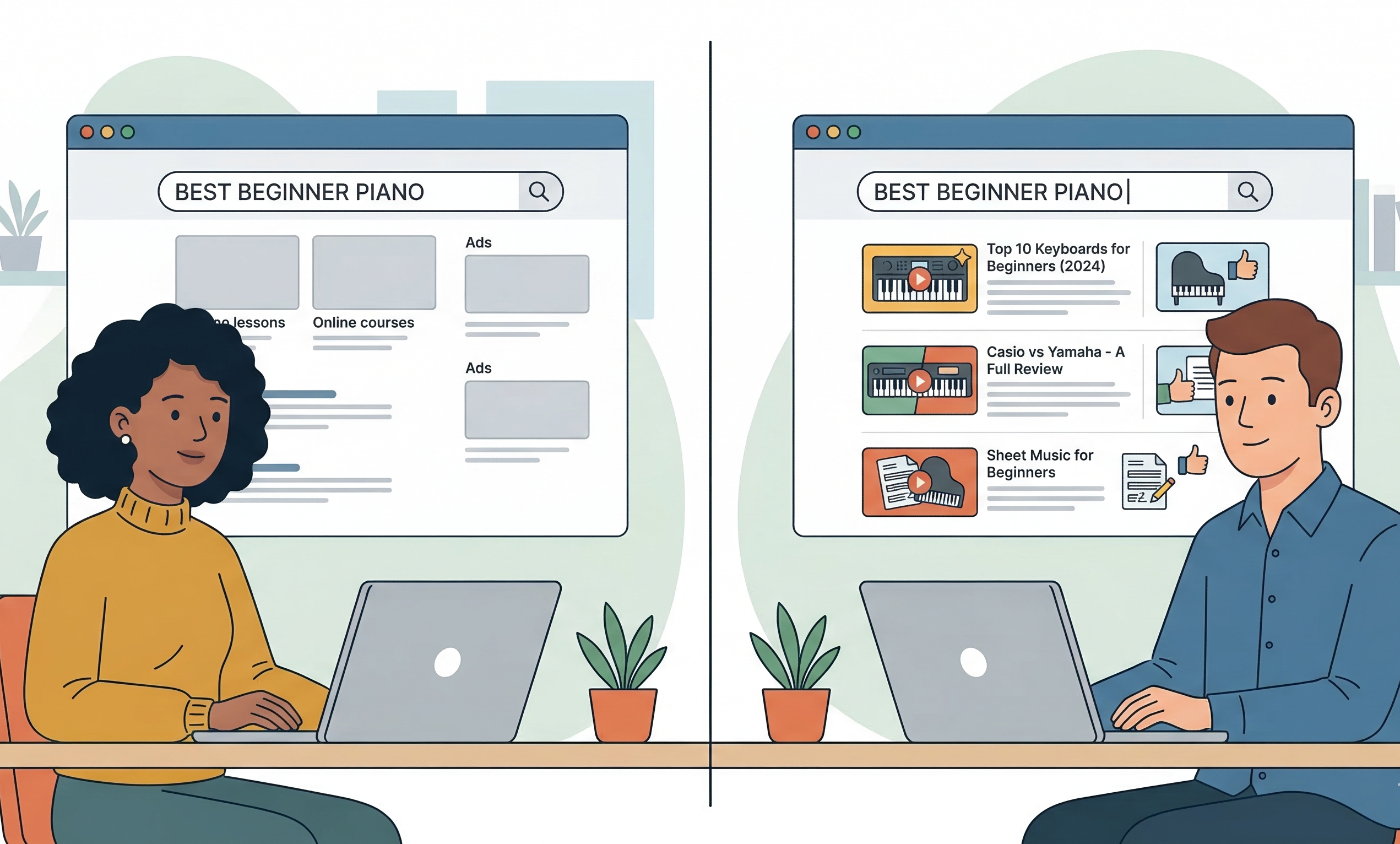
In plain English: two people typing the exact same search query can now get completely different results based on their personal history with brands, their past purchases, their travel bookings, and their emails.
If you’ve bought from a brand before, Google knows. And it factors that in.
This is not a small update. This changes the logic of how organic visibility works—and most business owners haven’t noticed yet.
What’s Actually Changing
Traditional SEO operates on a simple assumption: the same keyword produces roughly the same results for everyone. You optimize for the query, and you compete for the same pool of searchers.
That assumption is no longer true.
Personal Intelligence means Google is now surfacing results based on individual relationship history. The person who bought running shoes from your store three months ago sees different results than someone who’s never heard of you. Your purchase confirmation email sitting in their Gmail is now a data signal that influences whether you show up for them again.
The algorithm is starting to reward relationships, not just relevance.
The Cold Start Problem
Here’s the part that will keep business owners up at night.
If someone has never transacted with you—never bought, never booked, never signed up — Personal Intelligence doesn’t know you exist for them. You’re not in their data. You can’t be personalized toward someone who has no history with you.
This creates a two-speed SEO reality:
- Existing customers: Google’s ecosystem actively reinforces your brand. Every time they search in your category, your relationship history works in your favor.
- New prospects: You are invisible to Personal Intelligence. You have to earn their attention somewhere else entirely before organic search starts helping you.
Discovery and retention are now completely different problems—and they require different strategies.
What Business Owners Can Do
1. Make the first transaction your primary goal
The first purchase, booking, or sign-up is no longer just a revenue event. It’s the moment you enter someone’s Personal Intelligence profile. Everything downstream gets easier after that.
Look at your funnel with fresh eyes. Where are people dropping off before that first transaction? Fixing that is now an SEO decision, not just a conversion optimization decision.
2. Treat your transactional emails as brand signals
Purchase confirmations, booking receipts, shipping updates—these land in Gmail and become part of how Google identifies your brand in relation to that customer.
Your brand name needs to be consistent and clear in every transactional email. If your business operates under multiple names, uses abbreviations, or has a parent company name on receipts that doesn’t match your trading name—fix it. Google needs to connect the dots, and inconsistency breaks the signal.
3. Build your discovery layer outside of search
Before someone transacts with you for the first time, Personal Intelligence can’t help you, which means new customer acquisition has to happen where personalization doesn’t filter you out.
Reddit. Quora. YouTube. Industry forums. Community groups. These are where people discover brands they’ve never bought from before. Organic search becomes your re-engagement and retention engine. Third-party platforms become your acquisition engine.
If you haven’t invested in a brand presence on these platforms, now is the time.
4. Create content that LLMs can actually retrieve
AI Mode in Search—the feature Personal Intelligence is embedded in—doesn’t just rank pages. It synthesizes answers from content it deems authoritative and retrievable.
That means structured how-to content, named frameworks, and step-by-step guides. Content that answers a specific question directly and completely.
A business owner who has published a specific, named process for how to do the thing their customers are trying to do—and published it in plain, structured language—is far more likely to be cited by AI than a business with a polished About page and a generic blog.
Write for the person mid-task, not the person browsing.
5. Build entity clarity across every touchpoint
Google’s ability to personalize depends on its ability to recognize your brand consistently across contexts. That means your brand name, your product names, and your location—these need to appear consistently across your website, your emails, your listings, your reviews, and any third-party mentions.
If someone finds you on Yelp, buys from your site, gets an email from a slightly different company name, and then reviews you under yet another variation—Google struggles to connect those signals. Entity clarity is the foundation everything else sits on.
6. Invest in your email list as a first-party asset
Google’s ecosystem is powerful, but it’s Google’s. Your email list is yours.
A customer on your email list is a customer you can reach directly—regardless of how personalized search evolves. The brands that are least exposed to algorithm changes are the ones that have built direct relationships they own.
Personal Intelligence makes Google’s ecosystem more powerful for retention. Your email list does the same thing, except you control it.
The Bigger Picture
There’s a marketing principle by Seth Godin that fits here perfectly: the smallest viable market leads to growth.
Personal Intelligence is the algorithm catching up to that idea. It is rewarding brands that have built genuine, specific relationships with real people—brands that show up in someone’s Gmail because that person actually bought something, not because they gamed a keyword.
The brands that spent the last five years chasing volume—optimizing for everyone, writing content for no one specific—are going to find that Personal Intelligence doesn’t help them much. The algorithm doesn’t have data on relationships that don’t exist.
The brands that served a specific audience well, earned real transactions, and built real history with real customers—those brands are about to get a tailwind they didn’t expect.
Organic visibility in the AI era is not about ranking for the right keywords anymore.
It’s about being the brand that already exists in someone’s life before they search.
