Leading full-funnel SEO strategy for mid-market and enterprise B2C/B2B clients — and rebuilding how the agency delivered it.
Operatic is a multidisciplinary digital marketing agency based in Hamilton, Ontario. When I joined in October 2022, the SEO practice was functional but not systematized — each campaign was largely rebuilt from scratch, reporting was inconsistent, and SEO wasn’t yet embedded into the agency’s broader creative and development workflow.
My mandate covered two things simultaneously: deliver strong results for clients, and fix the underlying processes so the agency could scale SEO properly.
Over sixteen months, I owned the SEO strategy for a portfolio of mid-market and enterprise clients across auto insurance, health and beauty, and B2B industries — while rebuilding the internal processes that every future SEO project would run on.
Client Results
Auto Insurance Client — Full-Funnel SEO
This was the most complex and highest-stakes account I managed at Operatic. The client operated in a highly competitive, high-CPC vertical where organic rankings directly reduce paid acquisition costs — every percentage point of organic traffic growth has measurable financial impact.
I built and executed a full-funnel SEO strategy across informational, preferential, and transactional intent:
- Mapped the full keyword clusters by funnel stage and search intent
- Audited and restructured site architecture for crawlability and topical clarity
- Built long-form and industry-relevant informational content aligned with SERP intent to capture top-of-funnel traffic
- Build and optimized commercial local landing pages for both rankings and conversions
- Developed metadata, internal linking, and structured data across the full site
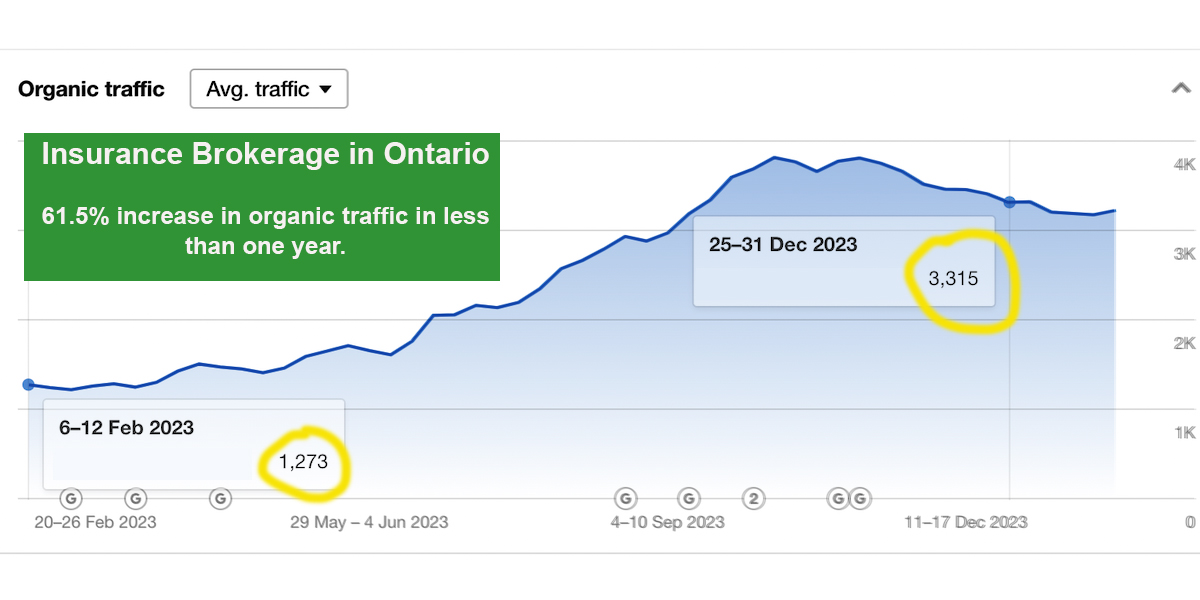
Results in under 12 months:
- Organic traffic increased by 61.5%
- CTR increased by 69%
In the auto insurance niche, where competitors spent years and significant budgets building domain authority, those gains represent real displacement—not incremental improvement.
Health & Beauty Clients
Across two health and beauty clients, I conducted full technical audits and developed SEO strategies with traffic growth forecasts tied to quarterly business objectives. Work covered keyword research, on-page optimization, site structure improvements, and content gap analysis. Both clients saw measurable organic visibility improvements within the first six months of engagement.
Process Work — Building the Agency’s SEO Foundation
Beyond client delivery, I led the formalization of Operatic’s internal SEO processes — something that had direct impact on campaign quality and team efficiency across the board.
What I built:
- Standardized audit framework — a repeatable technical and content audit process that any SEO manager on the team could execute consistently
- Campaign delivery templates — keyword research, content briefs, monthly reporting, and roadmap documentation that reduced onboarding time for new clients
- Cross-functional SEO integration — working directly with Operatic’s creative and development teams to embed SEO requirements into design and build workflows, rather than retrofitting them after launch
- Forecasting methodology — traffic and ranking forecasts built in GA4 and Looker Studio that connected SEO investment to projected revenue impact, used to secure client buy-in for larger optimization initiatives
This process work wasn’t glamorous, but it’s what allowed the team to scale quality SEO delivery rather than reinventing the wheel on every new account.
My Approach to Work
SEO Strategy & Roadmapping
Every client project started with a full audit to understand the site’s technical health, content gaps, keyword landscape, and competitive analysis. From that, I built prioritized roadmaps that sequenced initiatives by impact and effort across technical, content, and off-page. SEO roadmaps were tied directly to the client’s revenue and traffic goals.
I also aligned SEO roadmaps with broader marketing timelines. For example, if the paid media team were running a seasonal campaign in Q3, the SEO content calendar was built to support and amplify it, not operate independently.
Analytics & Reporting
I built Looker Studio and GA4 dashboards that connected the full chain from rankings to traffic to conversions. The reports were designed for two audiences: the internal account team (technical detail, task tracking) and the client stakeholder (business impact, trend lines, next steps). Quarterly business reviews included competitive gap analysis and updated growth projections to keep roadmaps aligned with evolving market conditions.
Client Communication & Stakeholder Management
I presented strategies and quarterly business reviews directly to client leadership — VP and C-suite level. That meant translating technical SEO decisions into business language: not “we’re fixing crawl errors” but “this is costing you indexation on your highest-converting pages, and here’s the revenue impact of fixing it.”
I believe that building client trust was as important as building website rankings. I set realistic expectations, tracked against agreed KPIs, and created business cases for every major investment recommendation. Clients who understand why they’re doing something are far more likely to give the green light and stay the course.
How This Role Helped Me Grow
Working across an agency portfolio — multiple industries, multiple stakeholders, multiple budgets — sharpens something you can’t get from a single in-house role: the ability to identify what’s actually moving the needle versus what just feels productive. Every client had different constraints. Every campaign required a different entry point. That pattern recognition is now one of the sharper tools on how I approach any new engagement.
It also reinforced something I already believed: SEO that isn’t integrated with the broader marketing and product team will always underperform. The best results at Operatic came from accounts where SEO, creative, and development were working from the same brief. The ones where SEO was treated as a bolt-on usually plateaued.